
Case Studies
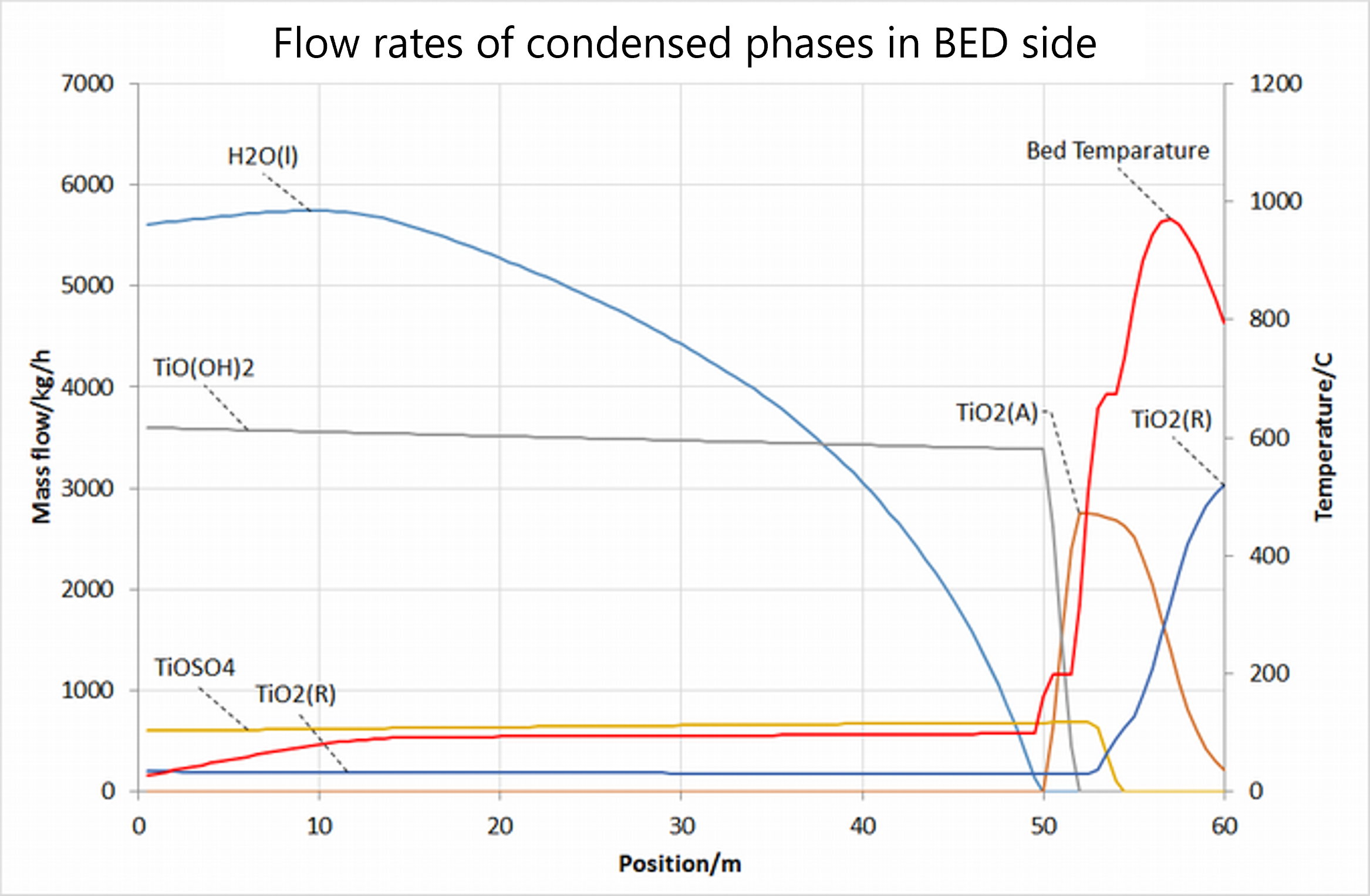
TiO2 Calcination (Moist Feed)
Rutile titanium dioxide (TiO2(R)), widely used as a pigment, is produced by calcining titanium oxyhydroxide (TiO(OH)2) in a rotary kiln. This precursor is obtained by separating iron from ilmenite ore (FeTiO3) and subjecting it to hydrolysis. The material is fed into the kiln as a moist slurry. When anatase titanium dioxide (TiO2(A)) is heated to 900 °C or higher, it undergoes a phase transition into the stable rutile structure.
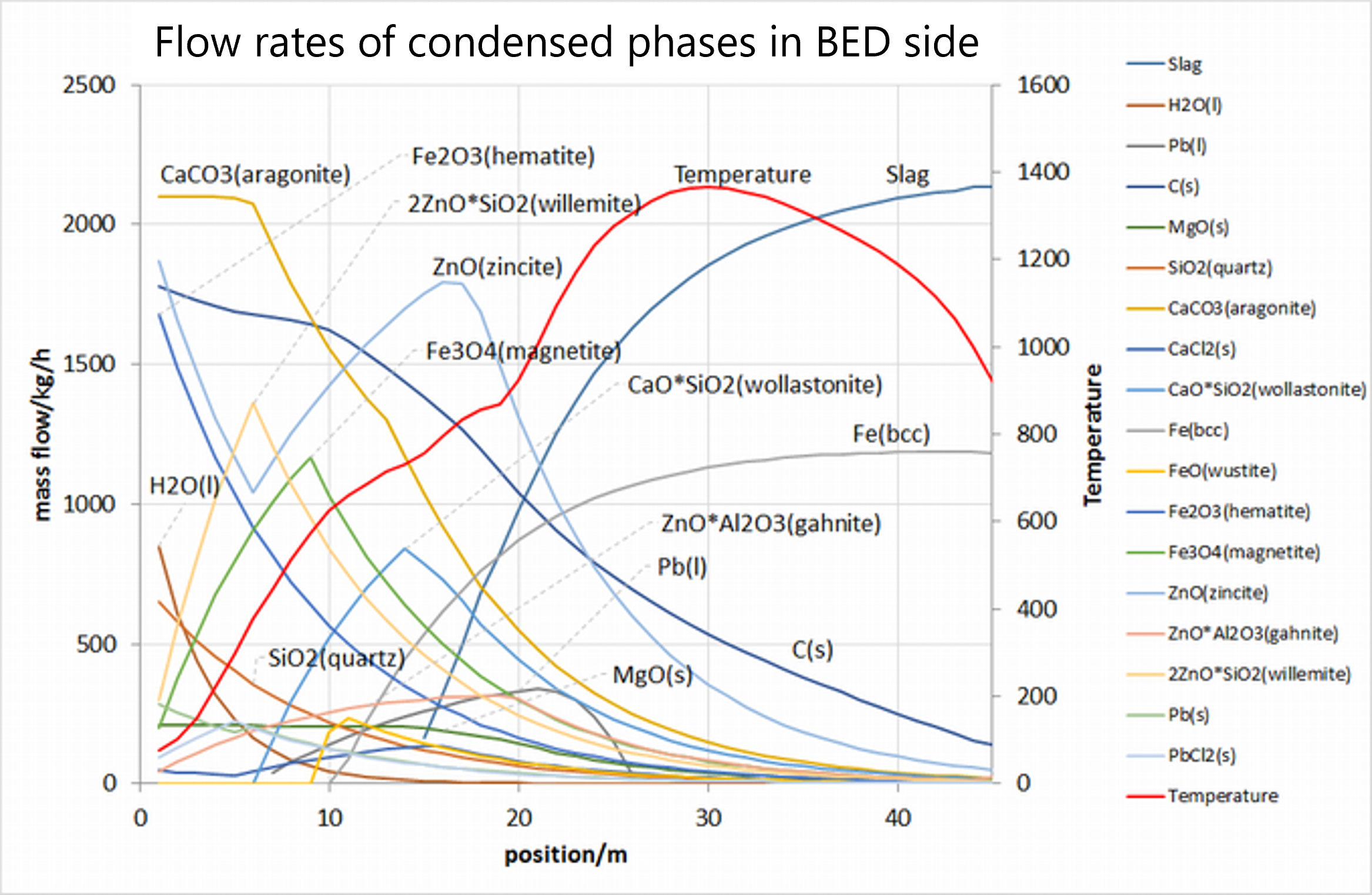
Zinc Oxide Production Model (Waelz Kiln)
Waelz kilns serve as a highly effective method for recovering zinc from electric arc furnace (EAF) dust and other metallurgical processes. The material bed consists of zinc oxides and coke breeze, which acts as the reducing agent. Inside the kiln, zinc and lead are reduced and volatilized at temperatures between 1100°C and 1200°C, and are subsequently re-oxidized in the gas stream to be recovered as zinc oxide flue gas. The remaining bed material, containing molten slag and iron, is collected at the kiln's burner-side discharge and utilized for landfill applications.
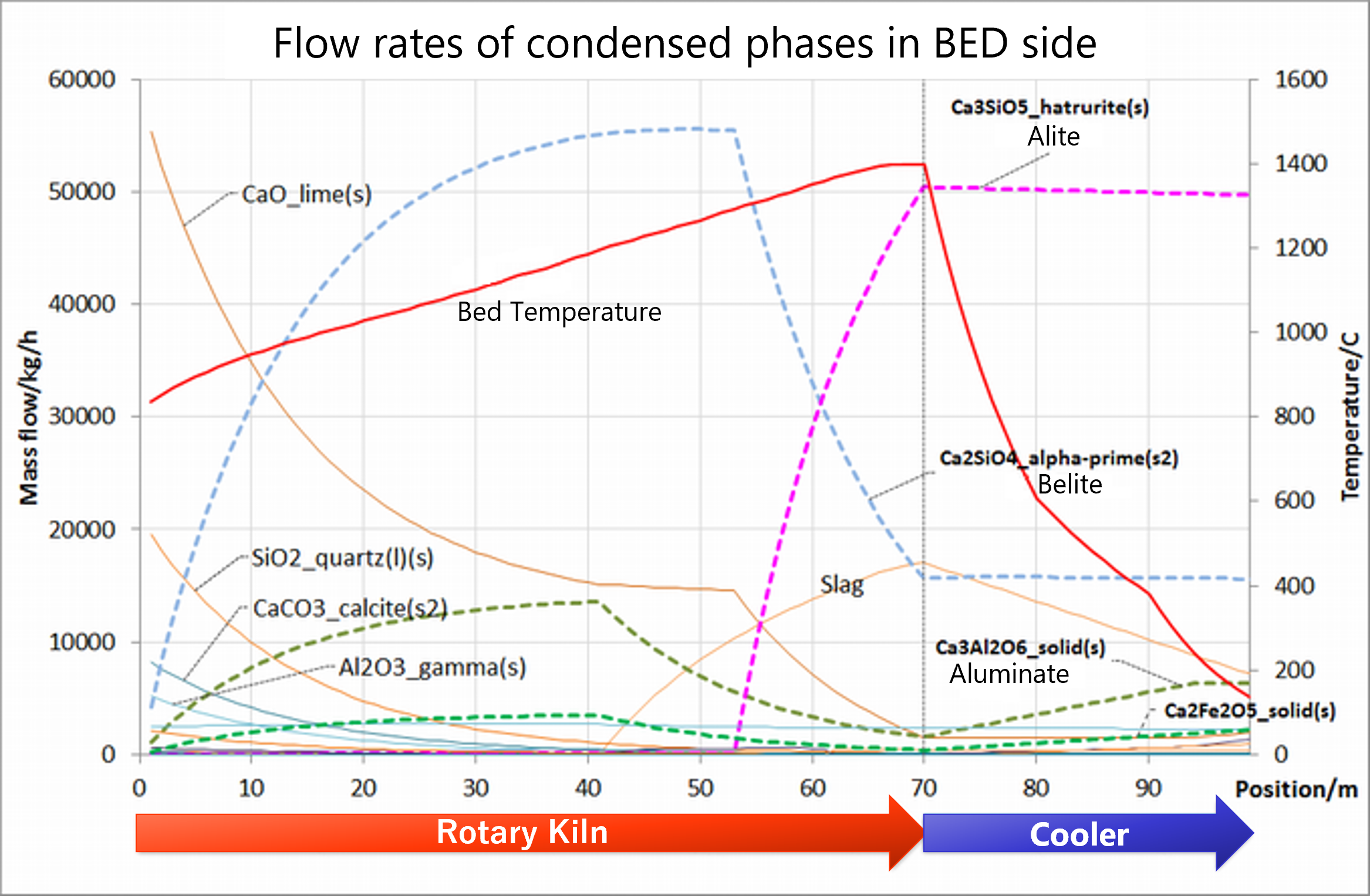
Clinker Formation in the Cement Process
In the cement kiln, a raw mix of quicklime (CaO), silica (SiO2), clay (Al2O3), and iron materials undergoes complex chemical reactions. The material is calcined at peak temperatures exceeding 1450 °C, where partial melting occurs to promote granulation and form nodular clinker. The resulting clinker is then efficiently cooled in a dedicated clinker cooler.
Other examples
- Waste Incineration Furnaces
- Nickel Smelting
